
3 Thi
The 3 Things Safety Summit 2026 brings construction leaders, safety professionals, supervisors, trainers, and industry partners together for one practical purpose: improve how we lead, plan, and carry out safety in the field.
Trivent Safety Consulting will host the 3 Things Safety Summit 2026 on Friday, October 9, 2026, in Wheat Ridge, Colorado, from 7:00 a.m. to 3:30 p.m. This event goes beyond regulatory updates. Instead, it gives attendees practical ideas they can take back to their companies, projects, supervisors, and employees.
This year’s theme gets directly to the point:
Lead It. Plan It. Prove It.
After more than three decades in construction and safety, I have learned one lesson again and again: great safety programs do not happen by accident.
Leaders build them. Teams strengthen them through planning. Then the field proves whether they actually work.
Those three ideas are more than a slogan. They describe what an effective safety program looks like when people put it into practice. The 3 Things Safety Summit 2026 is built around turning those three ideas into practical actions attendees can use in the field.
Lead It at the 3 Things Safety Summit 2026: Safety Starts With Leadership
Safety starts with leadership because employees watch what leaders do.
Every organization has policies, procedures, rules, and expectations. However, workers often decide what truly matters by watching how leaders respond when pressure increases or conditions change.
For example, a superintendent who walks past an unsafe condition sends one message. A supervisor who stops the work, talks with the crew, and corrects the condition sends a very different one.
In other words, leadership sets the standard.
At the same time, strong leaders know that the safety department cannot carry the entire responsibility for safety. Operations, project management, supervision, craft employees, and executives all play a role.
In addition, good leaders do not treat safety and production as competing goals. Well-planned work is usually safer, more predictable, and more productive. As a result, companies can reduce disruptions, investigations, equipment shutdowns, injuries, schedule impacts, and unexpected costs.
At Trivent Safety Consulting, we focus on helping companies bridge the gap between production and safety. We do not want organizations to believe they must choose one over the other.
That same philosophy will guide the 3 Things Safety Summit 2026.
During the summit, we will explore practical questions. How do we create accountability without creating unnecessary resentment? What helps supervisors become more active in safety? How do we make safety an operational responsibility instead of assigning it only to the safety manager?
These conversations can help organizations move from good intentions to meaningful change.
Plan It at the 3 Things Safety Summit 2026: Safety Planning Is Work Planning
Some of the most important safety decisions on a construction project happen before anyone picks up a tool.
Therefore, planning gives teams a chance to identify hazards, assign responsibilities, select equipment, review sequencing, confirm training, and develop controls before work starts.
Unfortunately, many incidents trace back to decisions made hours, days, or even weeks earlier.
For instance, project leaders may compress a schedule. Additional manpower arrives. Meanwhile, trades begin stacking. A night shift starts. Design information changes. The team substitutes equipment. Suddenly, a three-day activity must finish in one day.
As a result, the field team must absorb the added risk while still meeting production goals.
That is why strong safety management stays proactive instead of waiting for something to go wrong. OSHA’s Recommended Practices for Safety and Health Programs also emphasize finding and addressing hazards before they cause injuries or illnesses.
Job hazard analyses, pre-task plans, lift plans, competent-person evaluations, inspections, employee training, logistics planning, and communication should serve a purpose. They should never become paperwork that people complete only to satisfy a requirement.
When teams use them correctly, they become operational tools.
In other words, planning safety means planning the work.
The 3 Things Safety Summit 2026 encourages attendees to move beyond one basic question:
“Are we compliant?”
Compliance matters. However, leaders should also ask:
“Have we prepared our people to perform this work safely and successfully?”
That second question creates a much stronger standard.
Prove It at the 3 Things Safety Summit 2026: Does Your Safety Program Work in the Field?
Eventually, every safety program faces the same test: does it work where the work happens?
For example, a company can have an impressive written program, detailed policies, orientations, toolbox talks, and safety banners. Yet those items only matter when they influence real decisions and real behavior in the field. 
The field provides the proof.
For example, ask whether employees received the right training and whether supervisors recognize hazards before an incident occurs. Do inspections lead to meaningful corrections? Does the team fix deficiencies promptly? Do incident investigations look for root causes instead of simply assigning blame?
Also, does project documentation match what is actually happening? Do workers feel comfortable speaking up when something does not look right? Do employees understand their stop-work authority? Does management follow through when someone identifies a problem?
Therefore, the answers show whether a safety program simply exists on paper or actually lives within the organization.
Strong programs rely on training, documentation, inspections, accountability, employee involvement, leadership, and action. More importantly, leaders connect those pieces and make sure they work together.
That is the meaning behind Prove It.
Why Attend the 3 Things Safety Summit 2026?
One of the greatest benefits of the 3 Things Safety Summit 2026 is perspective.
Most of us spend our days solving the problems directly in front of us. The superintendent looks at tomorrow’s schedule. Meanwhile, the safety manager addresses today’s inspection findings. The project manager tracks manpower, milestones, cost, and production.
At the same time, the foreman prepares the crew for the next activity, while the company owner watches risk, profitability, staffing, clients, and future work.
Because everyone has a different focus, it becomes easy to operate inside an organizational bubble.
A safety summit helps break that pattern.
In fact, attendees can hear how other professionals handle similar challenges, compare approaches, ask questions, build relationships, meet industry partners, and leave with ideas they can apply to their own operations.
Sometimes one conversation improves a pre-task plan. Another presentation may change how supervisors approach accountability. A new resource may solve a recurring field problem.
Just as important, one professional connection can become the person you call six months later when your organization faces a challenge it has never seen before.
That is how the value of the summit can continue long after October 9.
Safety Professionals Should Not Operate in Isolation
Construction continues to grow more complex.
Schedules remain aggressive. Projects get larger. Technology changes quickly. Owner expectations rise. Workforce experience varies widely.
Meanwhile, controlling contractors and subcontractors must manage several tiers of contractors, changing schedules, equipment demands, labor shortages, production pressure, design changes, and regulatory requirements.
Also, no single safety professional has every answer, and no one should expect them to.
The strongest safety professionals I have worked with throughout my career share several habits. They keep learning, ask questions, listen to people with different experiences, challenge their assumptions, and build professional relationships.
Most importantly, they make changes when someone shows them a better way.
The 3 Things Safety Summit 2026 creates an environment where that type of learning can happen.
What Makes Trivent Safety Consulting Different?
Many organizations provide safety consulting and training. What makes Trivent Safety Consulting different is how we connect safety, people, and operations.
We do not believe a company can build a strong safety program by receiving a generic policy manual and filing it away.
Every company operates differently. Workforces vary. Projects change. Safety challenges also change.
For that reason, Trivent works directly with management, supervisors, and employees to understand each organization’s needs. From there, we develop practical programs, policies, training, inspections, and solutions that fit the work.
Our approach centers on real-world application.
For example, knowing a regulation is important. However, understanding how that regulation affects a steel erection crew at 6:30 in the morning requires a different level of experience.
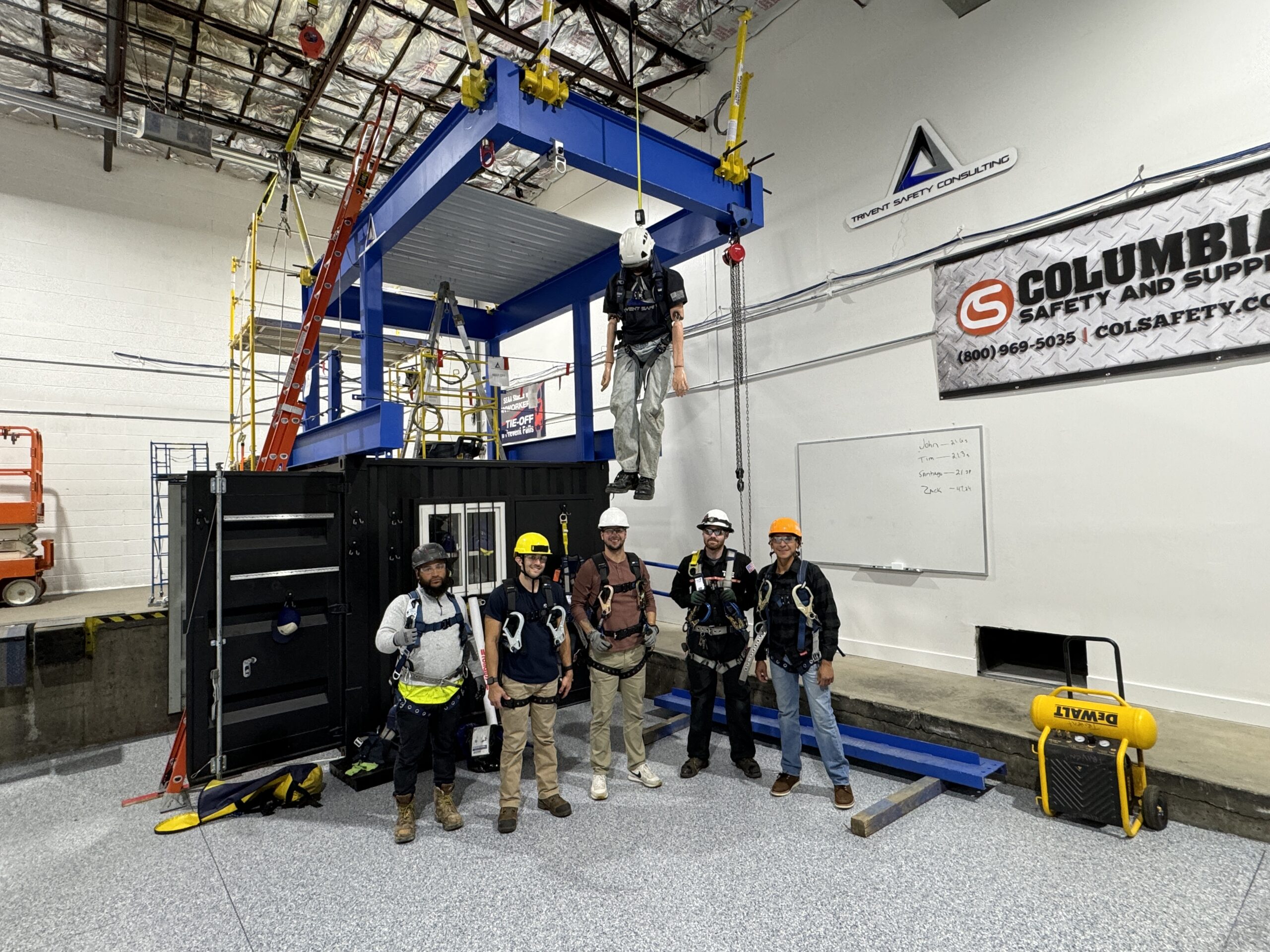
Similarly, the same principle applies to fall protection. Teaching from a PowerPoint can explain the rules, but field experience helps a trainer understand how workers actually move across structural steel, scaffolds, aerial lifts, rooftops, ladders, and constantly changing work areas.
Likewise, writing a safety program is one task. Helping a company implement that program successfully is another.
Therefore, that difference matters.
Our consultants and instructors want workers, foremen, supervisors, superintendents, project managers, safety professionals, and executives to understand what they need to do, why it matters, and how to make it work in the field.
That philosophy guides Trivent’s consulting services, training programs, site inspections, policy development, incident investigations, and ongoing safety support.
We are not trying to make safety complicated.
We are trying to make it effective.
Trivent Bridges the Gap Between Production and Safety
Production matters. So do schedules, quality, cost, customer expectations, and safety.
Pretending those responsibilities never compete for attention does not help anyone. Instead, strong organizations learn how to manage those pressures together.
At the same time, a good safety professional cannot simply tell operations what they cannot do. They must also help determine how the work can be performed safely.
That requires technical knowledge, field experience, communication, problem-solving, credibility, and strong working relationships.
It also requires safety professionals who understand the work and operational leaders who understand risk.
When those two groups work together, some of the greatest safety improvements can happen.
That is why Trivent Safety Consulting believes so strongly in bridging the gap between production and safety.
Who Should Attend the 3 Things Safety Summit 2026?
The 3 Things Safety Summit 2026 is not only for full-time safety professionals.
Therefore, construction executives, safety directors, project managers, superintendents, foremen, competent persons, trainers, HR professionals, risk managers, subcontractor leaders, safety representatives, vendors, and anyone responsible for leading people or planning work can benefit from the summit.
Ultimately, safety culture does not start and stop inside the safety office.
It takes shape wherever people make decisions.
If you influence how work is planned, supervised, performed, or evaluated, you influence safety.
Take Something Back to Your Team
My challenge to every summit attendee is simple: do not attend just to attend.
Instead, come looking for something you can use.
You may find a leadership idea that helps your supervisors. A planning concept may help your team identify risk sooner. A speaker may challenge the way your organization has always done something.
You may also meet a construction or safety professional who has already faced a problem your team is working through.
Finally, take one useful idea, tool, practice, relationship, or resource back to your organization and put it into action.
That is when professional development becomes organizational improvement.
Join Us for the 3 Things Safety Summit 2026
At Trivent Safety Consulting, we believe workplace safety requires more than regulations and compliance.
First, leaders must set the standard.
Next, teams must plan the work and anticipate risk.
Finally, everyone must prove that the systems, training, inspections, and expectations actually protect the people doing the work.
That is what the 3 Things Safety Summit 2026 is about.
Lead It. Set expectations, provide direction, and create accountability.
Plan It. Identify hazards, understand the work, anticipate changing conditions, and prepare before work begins.
Prove It. Put training, systems, inspections, documentation, accountability, and leadership into action.
Join Trivent Safety Consulting on Friday, October 9, 2026, in Wheat Ridge, Colorado, for a day of learning, discussion, professional networking, and practical safety ideas.
Bring your experience. Learn from others. Most importantly, leave with something you can take back to your organization and use.
Because at the end of the day, great safety is not measured by what we say.
It is measured by what we do.
Lead It. Plan It. Prove It.
Trivent Safety Consulting — Bridging the Gap Between Production and Safety.
ngs Safety Summit 2026: Lead It. Plan It. Prove It.
No comment yet, add your voice below!