
Ladder Safety Training OSHA 1926.1053: Because Gravity
Introduction
Ladder safety training OSHA 1926.1053 exists for one simple reason: gravity has perfect attendance. It doesn’t care how long you’ve been doing the job, how fast you need to finish, or how many times “this always works.” Ladders are familiar, deceptively simple tools—and that’s exactly why they hurt so many people every year. This blog breaks down ladder safety in plain language, real jobsite terms, and just enough humor to make the lessons stick.
Rule #1: Ladders Are Tools, Not Suggestions
According to OSHA 29 CFR 1926.1053, ladders must be used only for their intended purpose. That means: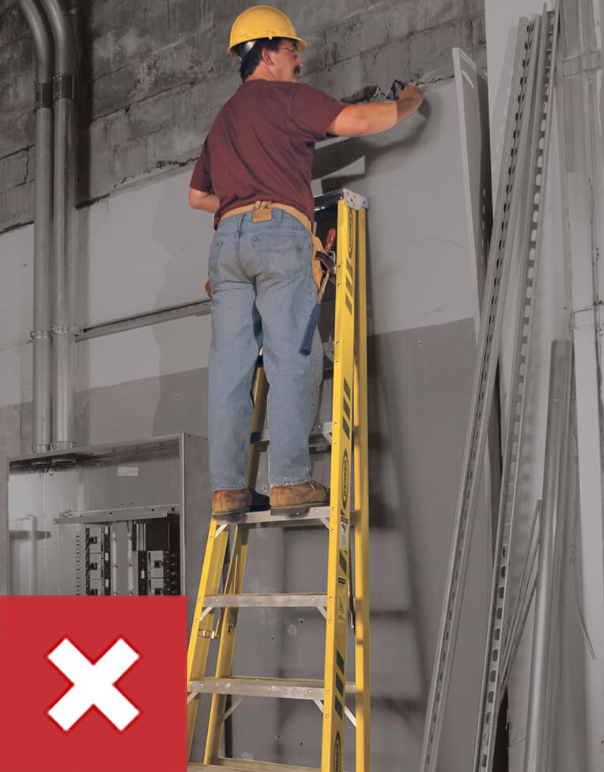
-
Step ladders are not straight ladders
-
Straight ladders are not scaffolding
-
And the top step is not a “just-for-a-second” work platform
If you’re standing somewhere the manufacturer never designed you to stand, gravity is already drafting its report.
Why Ladder Safety Training OSHA 1926.1053 Still Matters on Modern Jobsites
Ladder falls aren’t caused by complicated failures—they’re caused by shortcuts. Effective ladder safety training OSHA 1926.1053 focuses on the basics: proper setup, inspection, and disciplined use. These rules haven’t changed much over the years because the physics haven’t changed either. Gravity still wins.
The 4-to-1 Rule: Ladder Math Without the Calculator
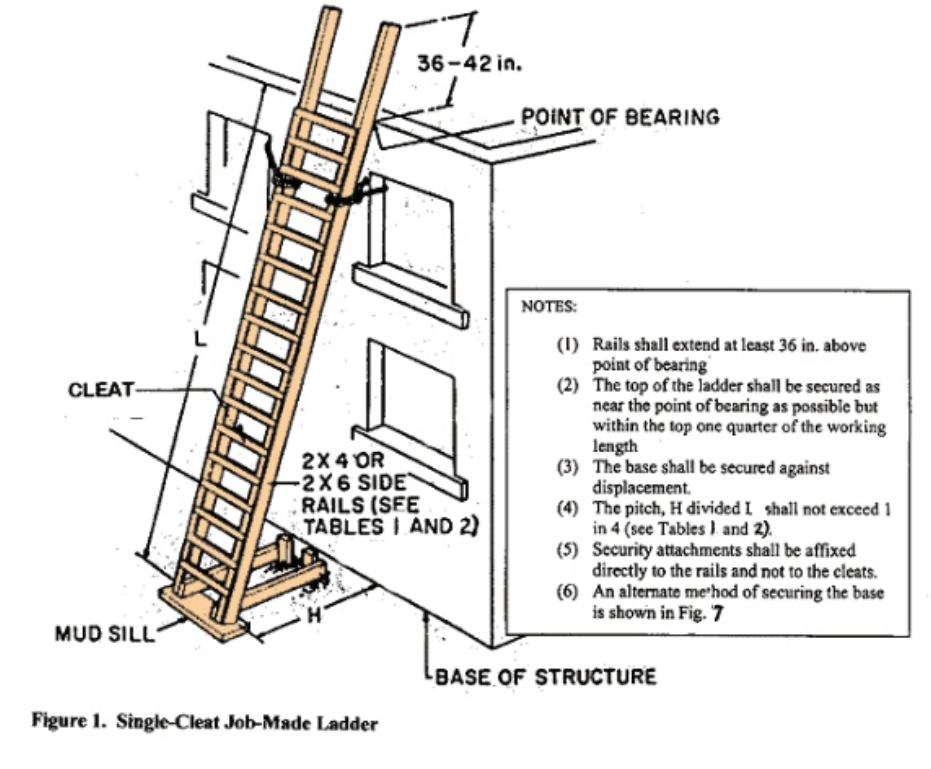
OSHA requires extension ladders to follow the 4-to-1 rule (1926.1053(b)(5)(i)):
For every 4 feet of ladder height, the base must be 1 foot away from the structure.
No eyeballing.
>No “that looks about right.”
Too steep and the ladder kicks out.
Too shallow and it slides down.
Either way, the fall happens fast—and paperwork lasts forever.
Three Points of Contact: You’re Not an Octopus
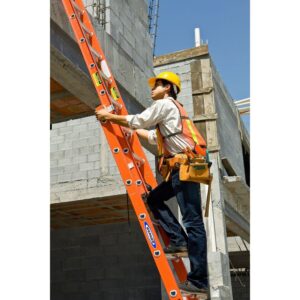
OSHA requires maintaining three points of contact while climbing or descending ladders (1926.1053(b)(21)). That means:
-
Two hands and one foot
-
Or two feet and one hand

It does not mean:
- One hand holding tools
-
One hand holding coffee
-
And one foot negotiating with friction
Inspect Before You Climb: The Ladder Won’t Warn You
OSHA 1926.1053 requires ladders to be inspected before each use (1926.1053(b)(15)). Look for:
-
Cracked or bent rungs
-
Split rails
-
Missing feet
-
Homemade repairs involving wire, tape, or hope
If you see damage, tag it and remove it from service immediately. Ladders don’t fail politely at ground level—they fail when you’re already committed.
Top Rungs and Top Steps: The Most Popular Bad Decision
OSHA is clear:
-
Do not stand on the top step or top rung (1926.1053(b)(13))
-
Do not climb cross-bracing (1926.1053(b)(14))
Those areas were never designed for balance. If you can’t reach it safely, the solution isn’t stretching farther—it’s getting the right ladder.
Secure the Ladder: “I’ve Got It” Is Not a Control Measure
Ladders must be placed on stable surfaces and secured when necessary to prevent displacement (1926.1053(b)(8)). That means:
-
Firm, level footing
-
Proper angle
-
Tie-off when required
It does not mean balancing on gravel, mud, ice, or trusting a coworker whose entire plan is verbal encouragement.
Final Thoughts: Training Beats Experience Every Time
Ladders don’t cause accidents—complacency does. The rules in ladder safety training OSHA 1926.1053 aren’t there to slow work down; they’re there to make sure workers go home on their feet instead of in an incident report. The next time someone says, “It’ll only take a second,” remember: so does falling.
Train With the Industry Leader
Ladder rules don’t save lives—training does. When ladder safety training OSHA 1926.1053 is delivered by professionals who understand real jobsites, crews don’t just comply—they buy in. That’s why organizations across the country trust Trivent Safety Consulting as the industry leader in hands-on, OSHA-aligned safety and training. Visit www.triventsc.com to learn how Trivent helps teams reduce falls, improve accountability, and send workers home safe—every single day.
OSHA Ladder Safety References
-
OSHA Ladder Safety Standard – 29 CFR 1926.1053
https://www.osha.gov/laws-regs/regulations/standardnumber/1926/1926.1053 -
OSHA Ladder Safety Quick Card
https://www.osha.gov/publications/osha3498 -
OSHA Ladder Safety Campaign
https://www.osha.gov/ladder-safety
No comment yet, add your voice below!