
Loss Prevention Starts With a Hard Hat:

Construction safety loss prevention is the strategic integration of safety programs with asset protection to reduce theft, equipment damage, and financial losses on jobsites. In construction, loss prevention and safety are often treated as separate responsibilities. Typically, one is managed through security and inventory controls, while the other is handled through OSHA compliance and safety training. However, in reality, construction safety loss prevention demonstrates that these functions are deeply interconnected on jobsites across the United States.

Unsafe jobsites don’t just lead to injuries—they also lead to theft, equipment damage, project delays, and costly insurance claims. In fact, according to the National Equipment Register, construction equipment theft costs the industry over $1 billion annually. Moreover, only 23% of stolen equipment is ever recovered.

Consequently, the most effective construction safety loss prevention strategies begin with a strong, well-executed safety program that protects both workers and assets.

Understanding Construction Safety Loss Prevention

From commercial and industrial projects to infrastructure and energy work, construction jobsites nationwide share the same risks. Specifically, these include heavy equipment, high-value materials, rotating crews, and demanding schedules. Therefore, construction safety loss prevention addresses these interconnected challenges.

Furthermore, when safety controls break down, losses increase through multiple channels:

  • Equipment damage and misuse – For instance, the Equipment Leasing and Finance Association reports that improper equipment use accounts for 30% of all equipment-related losses
  • Material theft and vandalism – Similarly, FBI crime statistics show construction sites are 400% more likely to experience theft than other business locations
  • Unauthorized jobsite access – Which subsequently creates both safety hazards and security vulnerabilities
  • Project delays and downtime – Costing an average of $1,600 per hour according to Construction Dive
  • Workers’ compensation and general liability claims – Additionally, NCCI research indicates construction has one of the highest workers’ comp claim frequencies

As a result, a jobsite with weak safety oversight often lacks structure and accountability—two essential elements of effective construction safety loss prevention.

The Hidden Costs of Weak Safety Oversight

When safety oversight is inconsistent, it creates gaps that affect far more than injury risk. In other words, the consequences extend well beyond worker safety into financial performance. This is why construction safety loss prevention must address both human and asset protection.

Structure Creates Prevention in Construction Safety Loss Prevention         

First and foremost, structure on a jobsite means: – Clear expectations and defined responsibilities – Documented safety procedures – Controlled access points – Organized material staging – Routine inspections – Clear equipment-use protocols

Without structure, jobsites become reactive. As a result, tools are left unsecured, materials are staged wherever space allows, and equipment use goes untracked. Ultimately, these conditions increase both safety incidents and asset loss—undermining construction safety loss prevention efforts.

Accountability Ensures Compliance

In addition to structure, accountability ensures those systems are followed. Specifically, when safety expectations are enforced consistently, crews are more likely to:

  • Secure tools at end of shift
  • Report damaged or missing equipment immediately
  • Challenge unauthorized access
  • Take ownership of their work areas

Furthermore, research from the Construction Industry Institute shows that projects with strong accountability systems experience 40% fewer safety incidents and 35% less equipment loss—demonstrating the power of construction safety loss prevention.

The “Nobody’s Watching” Effect

On the other hand, weak safety oversight sends a clear message: no one is watching. Consequently, on construction sites, that perception quickly leads to:

  • Increased theft and equipment misuse
  • Poor housekeeping practices
  • Delayed incident reporting
  • Higher claim frequency
  • High-risk behavior normalization

In contrast, strong safety oversight corrects this by creating visibility and presence. Therefore, regular safety walks, documented inspections, and consistent follow-through reinforce order and responsibility—deterring loss while protecting workers through comprehensive construction safety loss prevention.

Safety oversight creates order. And where there is order, there is less loss.

Building a Safety Culture for Construction Safety Loss Prevention

A strong safety culture protects more than people—it also protects assets through effective construction safety loss prevention. Indeed, according to CPWR – The Center for Construction Research and Training, companies with mature safety cultures report 70% fewer lost-time injuries and significantly lower equipment loss rates.

Moreover, on jobsites where workers are trained, engaged, and accountable, crews are more likely to:       
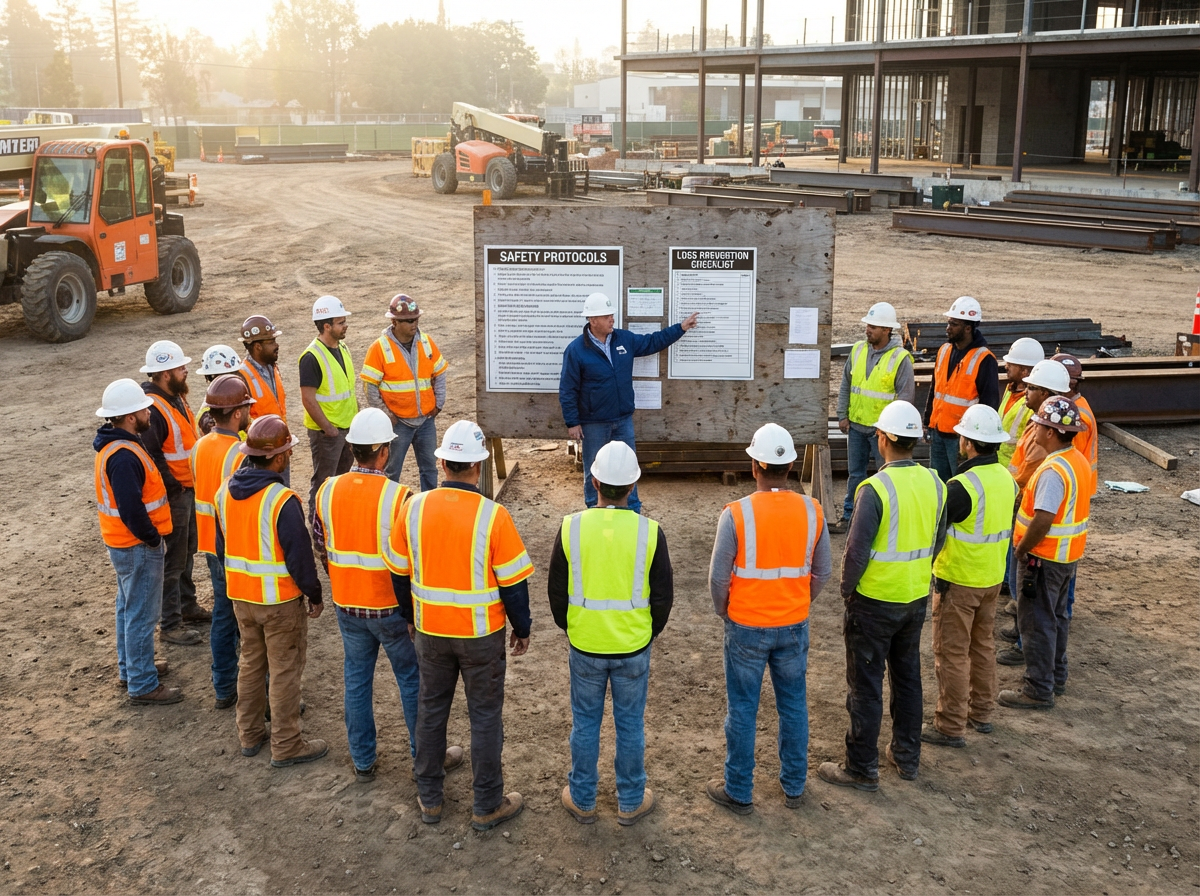
  • Secure tools and materials before leaving work areas
  • Report damaged or missing equipment within the same shift
  • Respect controlled access points and challenge unfamiliar personnel
  • Maintain clean, organized work areas that reduce hazards and improve visibility

Ultimately, when crews take ownership of safety, they take ownership of the jobsite itself—creating a foundation for successful construction safety loss prevention.

Inventory Management: Where Construction Safety Loss Prevention Meets Operations

Poor inventory management is one of the most overlooked contributors to both injuries and financial loss. Nevertheless, it represents a critical intersection point in construction safety loss prevention.

Specifically, untracked tools and poorly staged materials frequently result in:

  • Trip and struck-by hazards (OSHA’s leading cause of construction fatalities)
  • Equipment damage from improper storage
  • Lost or stolen materials
  • Reduced productivity and project delays

On the other hand, effective inventory management supports construction safety loss prevention by:

  1. Assigning accountability for tools and equipment
  2. Reducing clutter and unnecessary movement
  3. Improving material visibility
  4. Preventing unauthorized use
  5. Creating audit trails for loss investigation

In fact, the Associated General Contractors of America estimates that improved inventory practices can reduce material waste and loss by up to 25%—a significant benefit of integrated construction safety loss prevention.

7 Construction Safety Loss Prevention Strategies

The following construction safety loss prevention strategies improve safety while directly reducing loss. Additionally, each strategy builds upon the others to create comprehensive protection.

1. Control Jobsite Access for Construction Safety Loss Prevention

First, unauthorized access is a safety hazard first and a theft risk second. Therefore, implement: – Perimeter fencing with controlled entry points – Badge or check-in systems for all personnel – Clear signage identifying restricted areas – Visitor escort protocols

These access controls are fundamental to construction safety loss prevention.

2. Improve Lighting and Visibility

Second, well-lit jobsites reduce slips, trips, and falls while simultaneously discouraging theft and vandalism during low-visibility conditions. Furthermore, NIOSH research shows proper lighting reduces incident rates by up to 30%—supporting both safety and construction safety loss prevention goals.

3. Standardize Material Staging

Third, designated staging areas provide multiple benefits for construction safety loss prevention. Specifically, they: – Reduce struck-by incidents – Minimize equipment damage – Prevent material loss – Improve workflow efficiency

4. Maintain Strong Housekeeping Standards

Fourth, good housekeeping supports OSHA compliance and makes missing tools or materials immediately noticeable. Additionally, the “5S” methodology (Sort, Set in Order, Shine, Standardize, Sustain) is highly effective for construction safety loss prevention on construction sites.

5. Integrate Construction Safety Loss Prevention Into Safety Meetings

Fifth, daily toolbox talks should include construction safety loss prevention discussions on: – Tool control and accountability – Equipment inspections and proper use – Site security observations – Material tracking – Not just injury prevention

6. Implement Equipment Tracking Technology

Sixth, modern construction safety loss prevention solutions include: – GPS tracking for heavy equipment – RFID tags for tools and materials – Mobile inventory apps – Telematics for usage monitoring

7. Conduct Regular Safety and Security Audits

Finally, combined safety-security audits identify vulnerabilities before they result in loss. As a result, proactive identification prevents costly incidents and strengthens construction safety loss prevention programs.

Leadership’s Role in Construction Safety Loss Prevention

Supervisors and safety leaders are the frontline defense against loss. In fact, according to the Construction Management Association of America, leadership engagement is the single most important factor in jobsite safety performance and effective construction safety loss prevention.

Effective leaders consistently:

  • Conduct regular safety and security walks
  • Address unsafe behaviors immediately
  • Track equipment use and storage patterns
  • Hold crews accountable consistently
  • Model expected behaviors
  • Investigate incidents thoroughly

Therefore, strong leadership ensures safety expectations and construction safety loss prevention practices are consistently followed.

Incidents, Near Misses, and Hidden Financial Loss

Incident investigations should not focus solely on injuries. Instead, they often reveal construction safety loss prevention opportunities through:

  • Equipment misuse patterns
  • Poor storage practices
  • Training gaps
  • Security vulnerabilities
  • Process weaknesses

Near misses are early warning signs—not just of potential injuries, but also of future losses. Moreover, the Heinrich pyramid suggests that for every serious injury, there are 29 minor injuries, 300 near misses, and thousands of unsafe acts.

Consequently, addressing near misses protects both workers and project assets through proactive construction safety loss prevention.

The ROI of Construction Safety Loss Prevention

Across construction projects throughout the United States, construction safety loss prevention programs share the same goal: risk reduction. Furthermore, the financial benefits are substantial and measurable.

Strong construction safety loss prevention programs lead to:

  • Fewer injuries – Reducing workers’ comp costs by 20-40% (Liberty Mutual Research)
  • Reduced equipment theft and damage – Saving $50,000-$500,000 per major project
  • Lower insurance premiumsEMR reductions can save 15-30% on premiums
  • Less downtime – Preventing costly project delays
  • Improved project performance – Better schedule adherence and profitability
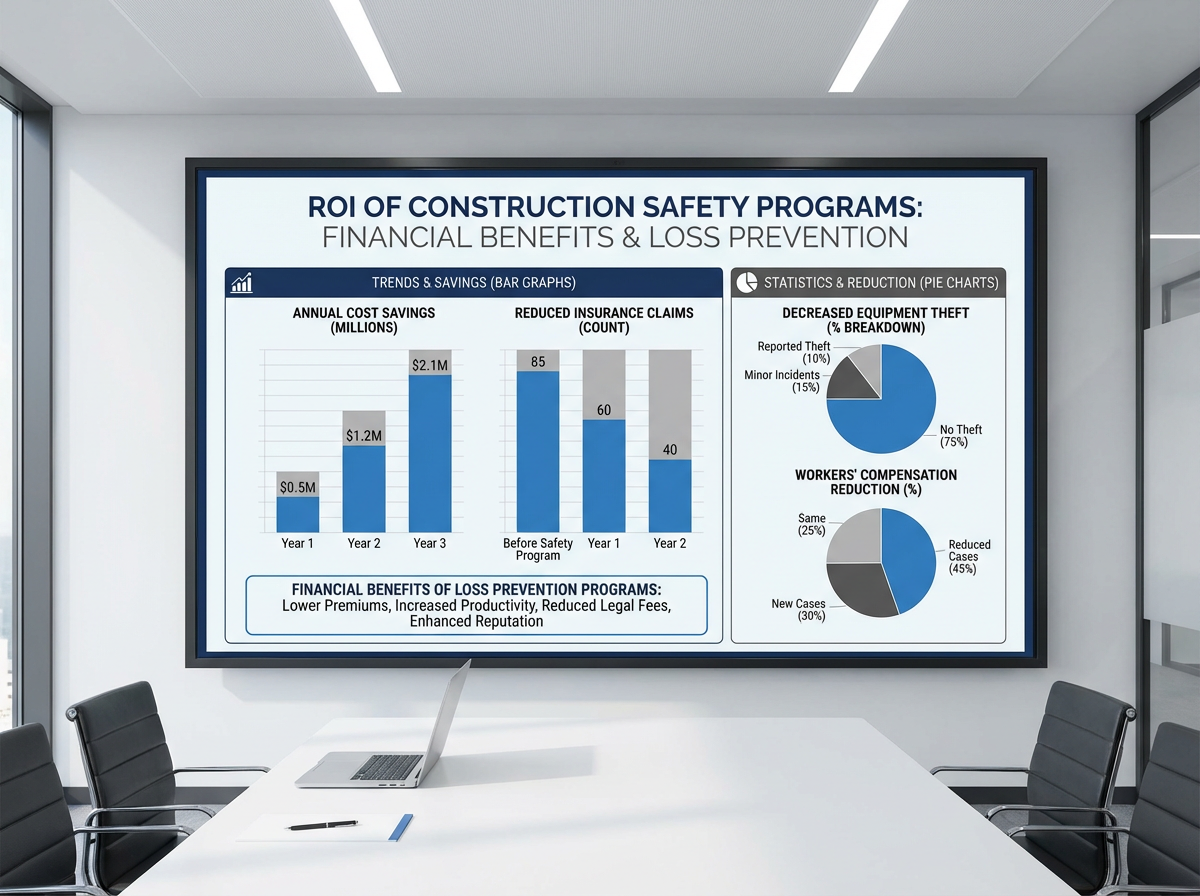
In addition, according to OSHA’s Safety Pays calculator, every dollar invested in workplace safety returns $4-$6 in cost savings—demonstrating the powerful ROI of construction safety loss prevention.

Construction safety loss prevention does not start with locks or cameras—instead, it starts with planning, training, and accountability.

And it starts with a hard hat.

Final Thoughts: Construction Safety Loss Prevention Is the Foundation

Construction safety loss prevention on jobsites doesn’t start with cameras, fences, or inventory spreadsheets. Rather, it starts with how the jobsite is run every day.

Throughout this discussion, one theme remains consistent:

Strong safety oversight creates structure
Accountability reduces theft, damage, and misuse
Inventory management supports both safety and cost control
Leadership presence and safety culture deter loss before it occurs

In short, protecting people and protecting assets through construction safety loss prevention are not competing priorities—they are the same priority.

If your organization is experiencing tool loss, equipment damage, frequent incidents, or rising insurance costs, the solution may not be more security. Instead, it may be better safety systems, stronger oversight, and clearer accountability through comprehensive construction safety loss prevention.

Take the Next Step With Trivent Safety Consulting

Whether you’re managing a single project or multiple jobsites nationwide, now is the time to evaluate how well your safety program supports construction safety loss prevention. Furthermore, a focused review of safety oversight, inventory practices, and leadership engagement can uncover risks before they turn into costly losses.

Trivent Safety Consulting offers construction safety loss prevention services including: – Comprehensive safety program audits – Customized loss prevention strategies – OSHA compliance training – Mock safety inspections – Temporary safety staffing solutions – Bilingual training programs

With over 75 years of combined field experience, our team understands the real-world challenges of balancing productivity, safety, and construction safety loss prevention.

Ready to strengthen your construction safety loss prevention program, reduce loss, and protect your bottom line?

Contact Trivent Safety Consulting today and start building a safer, more secure jobsite—one hard hat at a time.

Keepin Cool in the Hot Hot Heat


As the sun blazes overhead and temperatures rise, ensuring safety in the workplace becomes more crucial than ever. Heat-related injuries can turn an otherwise productive day into a health crisis, impacting not just employees but also businesses at large. With guidelines from the Occupational Safety and Health Administration (OSHA) highlighting best practices for working in hot conditions, it’s vital to recognize how to prevent heat illnesses like heat stroke and heat exhaustion. This blog post will guide you through understanding these risks, spotting symptoms early on, and implementing effective strategies to keep yourself—and your team—safe while battling the elements.

Take Breaks as Needed!

So grab a cool drink of water as we dive into essential tips for avoiding heat-related injuries at work!

Understanding heat related injuries


Heat-related injuries occur when the body overheats due to excessive exposure to high temperatures. This can lead to serious health issues, including heat exhaustion and heat stroke. Heat exhaustion typically manifests with symptoms like heavy sweating, weakness, dizziness, and nausea. It’s a warning sign that the body is struggling to cool down effectively. If ignored, it can escalate into heat stroke—a life-threatening condition characterized by confusion, rapid pulse, and even loss of consciousness.


Certain factors increase vulnerability to these injuries. Age plays a significant role; older adults often face greater risks due to decreased ability to regulate temperature. Additionally, individuals with pre-existing health conditions may be more susceptible. Understanding how these injuries develop helps workers recognize their own limits in hot environments and take proactive measures for protection against potential dangers. Occupational Safety and Health Administration (OSHA) guidelines for working in hot conditions

The Occupational Safety and Health Administration (OSHA) has established crucial guidelines for working in hot conditions. These help protect workers from heat-related illnesses, which can be severe or even fatal.


Employers should monitor temperatures regularly and implement a heat stress program. This involves providing training to employees about the risks of excessive heat exposure. Knowledge is power when it comes to safety. Additionally, OSHA emphasizes the importance of acclimatization. Workers must gradually adjust to high temperatures over several days, allowing their bodies time to adapt. Access to drinking water is also essential. Employers must provide plenty of water stations throughout the workplace so that employees stay hydrated at all times.

Implementing rest breaks is equally important. Regular pauses in shaded or cool areas will help lower body temperature and reduce fatigue during long hours outdoors or in heated environments.


Tips to avoid heat stroke, heat exhaustion, and dehydration at work


Stay Hydrated!

Staying cool while working in hot conditions is essential for your health. Start by scheduling regular breaks in shaded or air-conditioned areas. This allows your body to recover from the heat. Make sure to drink plenty of water throughout the day. Hydration plays a crucial role in preventing heat-related illnesses like heat stroke and dehydration. Aim for at least eight ounces every 20 minutes, especially if you’re sweating profusely. Also, consider adjusting work hours to cooler parts of the day when feasible. Early mornings or late afternoons can provide relief from baking midday sun. 7-tips for reducing heat exhaustion

Encourage team members to watch out for one another as well. A buddy system helps ensure everyone stays aware of their hydration levels and overall well-being, reducing individual risks significantly. Remember that consuming alcohol or caffeine can dehydrate you further—limit these during high-heat days!

Importance of staying hydrated and taking breaks in a hot environment


Staying hydrated in hot environments is crucial for maintaining optimal health. When temperatures rise, our bodies lose water quickly through sweat. This can lead to dehydration if not replenished adequately. Drinking plenty of water throughout the day helps regulate body temperature and supports overall function. It’s essential to make hydration a priority, especially during physically demanding tasks under the sun.


Taking regular breaks is equally important. These moments allow your body to cool down and recover from heat stress. Even short pauses can significantly reduce the risk of heat-related illnesses like heat exhaustion or more severe conditions such as sun stroke. Encourage coworkers to step away from their tasks periodically. Use these breaks to rehydrate, seek shade, or rest in cooler areas when possible. By fostering a culture that values both hydration and rest, workplaces create safer environments for everyone involved.


Proper clothing and gear for working in the heat


Stay Cool!

Choosing the right clothing is crucial for working in hot conditions. Lightweight, loose-fitting garments made of breathable fabrics like cotton or moisture-wicking materials can help keep your body cool. Dark colors may absorb heat, so opt for light shades instead. Consider wearing a wide-brimmed hat to protect your head and face from direct sunlight. This simple addition can significantly reduce your risk of sun stroke or other heat-related illnesses.


Don’t forget about protective gear! If your job involves safety equipment, look for items designed specifically for high temperatures. Ventilated helmets and cooling vests are excellent options that provide protection while promoting airflow Sunscreen should be part of your daily routine too. Choose an SPF that suits prolonged exposure to the sun, ensuring you reapply regularly throughout the day. These small adjustments make a big difference when it comes to staying safe and comfortable on the job site.

Signs and symptoms of heat related injuries to look out for

Recognizing the signs of heat-related injuries is crucial for safety at work. Early detection can prevent serious health issues, including death. Look for symptoms like heavy sweating and fatigue as initial indicators. These may escalate to dizziness or confusion if not addressed promptly.  A rapid pulse and pale skin often accompany these conditions. As dehydration sets in, watch out for dry mouth or headache—both signals that your body needs water urgently. Heat exhaustion can manifest through nausea or vomiting. If someone displays these symptoms, immediate action is necessary. Heat stroke presents a more severe scenario with high body temperature, altered mental state, and possible loss of consciousness. This medical emergency requires urgent attention to avoid lasting harm. Stay vigilant and proactive about recognizing these symptoms; it could save a life.


What to do if you or a coworker experiences a heat related injury

Act Fast, Get Help!

If you or a coworker shows signs of a heat-related injury, immediate action is crucial. First, move the affected person to a cooler environment. This could be indoors or under shade. Next, help them lie down and elevate their legs. Cooling the body temperature is essential to prevent serious complications. Use cool water or wet cloths on their skin. Encourage hydration if they are conscious and able to drink. Offer plenty of water but avoid caffeine and alcohol as these can worsen dehydration.

For severe cases like heat stroke, seek emergency medical assistance right away. Symptoms may include confusion, seizures, or loss of consciousness—these require urgent attention. Keep monitoring your colleague closely while waiting for help. Apply cool compresses until professional aid arrives; this can make a significant difference in recovery outcomes during critical moments.


Conclusion


Heat-related injuries are a serious concern in many workplaces, especially during the hotter months. Understanding the risks associated with heat exposure is crucial for both employers and employees. Following OSHA guidelines can help create safer work environments. Staying hydrated is essential; drinking plenty of water throughout the day can prevent heat exhaustion and sun stroke. Regular breaks in cooler areas also play a critical role in maintaining health during physically demanding tasks under hot conditions.


Wearing appropriate protective clothing and gear further reduces risk, as does applying sunscreen with an adequate SPF to shield against harmful UV rays. It’s vital to recognize signs of heat-related illness early—confusion, dizziness, or excessive sweating should never be ignored. If you or someone else shows symptoms of a heat injury, prompt action is necessary. Move them to a cooler area and provide hydration while seeking medical assistance if needed. By prioritizing safety measures around hydration, rest periods, protective clothing, and awareness of potential hazards associated with high temperatures at work settings, we can mitigate the dangers posed by extreme heat effectively.

Keeping everyone safe from these avoidable injuries not only protects lives but also enhances workplace productivity and morale.

Portable Fire Extinguishers & OSHA CFR 1926 Subpart F

What 29 CFR 1926.150(c)(1)(viii) Says

Portable fire extinguishers (PFE) are an essential component of fire preparedness.
29 CFR 1926.150(c)(1)(viii) states: “Portable fire extinguishers shall be inspected periodically and maintained in accordance with Maintenance and Use of Portable Fire Extinguishers, NFPA No. 10A-1970.” NFPA 10 is the standard for portable fire extinguishers. Fire extinguishers require frequent inspections not to exceed 31 days. Additional requirements for annual inspections, required maintenance and hydrostatic testing which requires a certified professional, but more on that later. For general worksite purposes, this blog will be covering the monthly inspection process performed by any competent person.

NFPA 10

NFPA 10 states that the portable fire extinguisher (PFE) inspection process begins with the inspector confirming the correct location. However, in construction the locations may vary depending on the work performed in the area. 29 CFR 1926.150 Fire Protection and Prevention standard provides information on where extinguishers need to be located. 1926.150(c) states that PFEs shall be provided for each 3,000 square feet of the protected building area and that the travel distance between the protected area and the nearest fire extinguisher shall not exceed 100 feet.

Inspection Process

The inspection tag

Next the PFE inspection process is to ensure the fire extinguisher is visible – this can be achieved by location markers, flags, signs or stickers. PFE stations are often made from bright red plastic or will have large signs indicating the PFE location. The point is that they must be conspicuously located and not obstructed.

Continuing the inspection process, the inspector must confirm that the PFE is accessible and not blocked in any way. PFE’s in cabinets must be free of obstructions that will prevent the cabinet door from opening. This is also true for fire extinguisher stands – the PFE must be accessible from all sides. Inspectors must clear the material and free the area around the PFE to allow access. For PFE’s in fixed locations, consider marking the floor around the PFE to designate the space not for storage. Do not tie fire extinguishers down with rope, wire, or any material that would make access difficult in an emergency.

Pressure Gauge

Proper gauge reading.

The following step is to check the pressure gauge on the PFE. The only acceptable position for the needle is in the green. The needle in the yellow or red indicates that the PFE is either over or undercharged. Extinguishers not in the green will not have sufficient pressure to discharge the extinguishing agent.

Part of the pressure gauge inspection requires verification of safety pin secured and affixed to the PFE by means of a tamper seal. The tamper seal holds the pin in place and prevents accidental discharge. If an extinguisher is missing the tamper seal, it must be replaced. The tamper seal holds the pin firmly but also breaks easily when pulled. This is to ensure the pin stays in place but also that an adult can break it and then use the PFE. do not secure Safety Pin with rope, wire, or zip-ties. Minimal effort needed when removing pin.

Ensure PFE Contains The Extinguishing Agent

Two methods: weighing or hefting the PFE. The weighing method is commonly used for extinguishers that do not have a pressure gauge. The weight of the extinguisher is confirmed by weighing the extinguisher and confirming the listed tag weight. Extinguishers with gauges use the Hefting process for inspection. Hefting requires the inspector to manually lift the PFE and overturn it to mix the extinguishing media in the cylinder. For ABC PFEs this would entail the inspector turning the PFE upside down and listening for the extinguishing media shift in the cylinder. If the media does not move on its own, the inspector can tap the bottom of the cylinder with their hand or a small rubber mallet. This process also ensures that the extinguishing media is loose and will flow properly from the nozzle.

The Last Step of Inspection

The final step for the inspector is to document the inspection on the monthly inspection tag (MIT). OSHA accepts documentation as proof that the PFE was inspected and is ready for use. Fire extinguishers require frequent inspections. 12-monthly inspections in a year.

Other important factors for PFE upkeep include intervals of maintenance and hydrostatic testing. Fire extinguisher maintenance cycles require disassembly of components for functionality check and reassembled after successful inspection. The same is true for hydrostatic testing with the added step of testing the cylinder for structural integrity. Any professional service will be able to identify what PFEs in your inventory require.

Summary

Portable fire extinguishers are a critical component to hot work operations at the jobsite. Inspecting fire extinguishers to ensure they are properly working condition provides safe working conditions at the project. Informed workers make safe projects and worksites. Hands on training is the best training you can provide your team. Trivent Safety’s OSHA 10 and OSHA 30 courses are excellent for providing a hands on safety training experience!